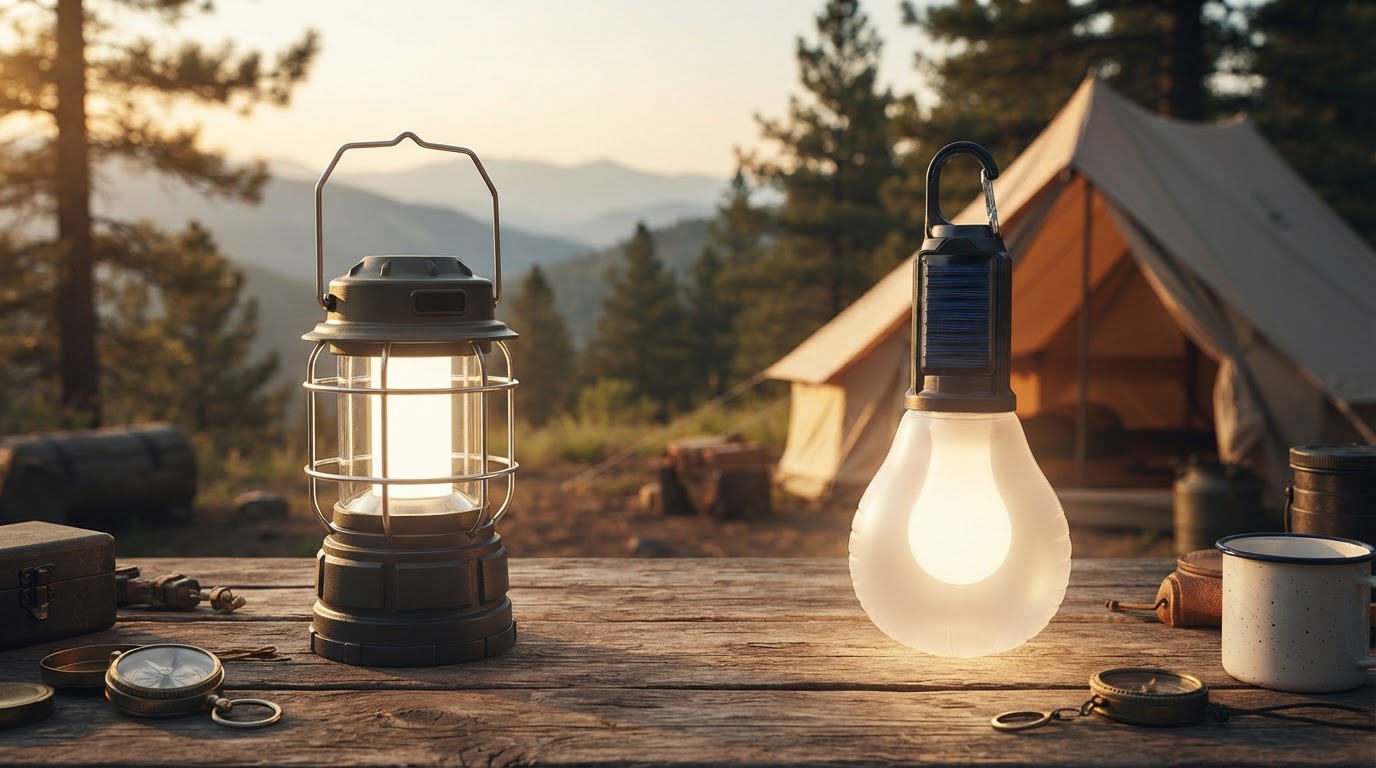
Why choose an inflatable Solar Camping Light for tents?
 Jordan HaleStaff Writer
September 7, 2026 — Inflatable Solar Camping Light models provide a superior weight-to-lumen ratio for mobile users compared to rigid plastic alternatives, provided the PVC or TPU housing maintains its airtight seal.
I remember the first time I uncapped the valve on my Solar Camping Light high above the tree line. The air was thin and biting, but as the light expanded from a flat pancake into a glowing cube, the starkness of the ridge felt a little more like home. For backpackers counting every gram, these collapsible lanterns solve the problem of bulk without sacrificing the soft, diffused glow needed for a cramped tent.
How does an inflatable Solar Camping Light save space?
Inflatable solar lights save space by utilizing a collapsible air chamber that reduces the device's volume by approximately 80% when deflated. The first thing I noticed was how easily the light slipped into the side pocket of my pack, occupying no more room than a thin notebook. Unlike traditional hard-shell lanterns that force you to pack around their fixed dimensions, the Solar Camping Light design relies on a flexible bladder that protects the internal LEDs and circuitry from impact. It turns out that this air cushion serves a dual purpose: it acts as a shock absorber during transit and creates a large, frosted surface area that prevents the harsh glare often associated with direct LED exposure. This makes it an ideal choice for those looking for [lightweight solar camping light for trek](/blog/lightweight-solar-camping-light-for-trek) options where pack volume is at a premium.
Is the durability of an inflatable Solar Camping Light reliable?
Photo by Amel Uzunovic on Pexels
An inflatable Solar Camping Light is highly reliable in rugged environments because its flexible construction prevents the cracking and shattering common in rigid plastic lanterns. Somewhere around week two of a thru-hike, I dropped my light onto a jagged granite slab; instead of snapping a plastic hinge, the lantern simply bounced. Most high-quality inflatable models utilize heavy-duty TPU, which remains pliable even in sub-freezing temperatures. This flexibility is a core component of the [waterproof solar camping gear](/blog/waterproof-solar-camping-light-protection-framework) standard, as the sealed air chamber inherently protects the battery and solar panel from moisture ingress. While users must be mindful of punctures from thorns or knives, the lack of mechanical moving parts—like traditional switches or swing handles—means there are fewer points of failure during extended trips. This resilience is why I keep coming back to these units for my [emergency solar light for backpacking](/blog/emergency-solar-light-for-backpacking) kit.
Quick answers

Q: How long does it take to charge an inflatable solar light? / A: Most models require 7 to 10 hours of direct sunlight to reach a full charge via the integrated monocrystalline panel. In overcast conditions, this duration can double, making it essential to strap the light to the outside of a pack during the day.
Q: Can these lights be used as a power bank? / A: While some larger Solar Camping Light units feature a USB-out port, many ultralight inflatable versions omit this to maintain a weight under 5 ounces. Always check the specific milliamp-hour (mAh) rating if you intend to charge a phone.
Q: Are inflatable solar lights safe to leave in a hot car? / A: No, the internal lithium-ion batteries and the PVC housing are sensitive to temperatures exceeding 120 degrees Fahrenheit. Excessive heat can cause the air inside the chamber to expand beyond its seam strength or degrade the battery life.
Learn more about Solar Camping Light at https://solarcampinglight.com.