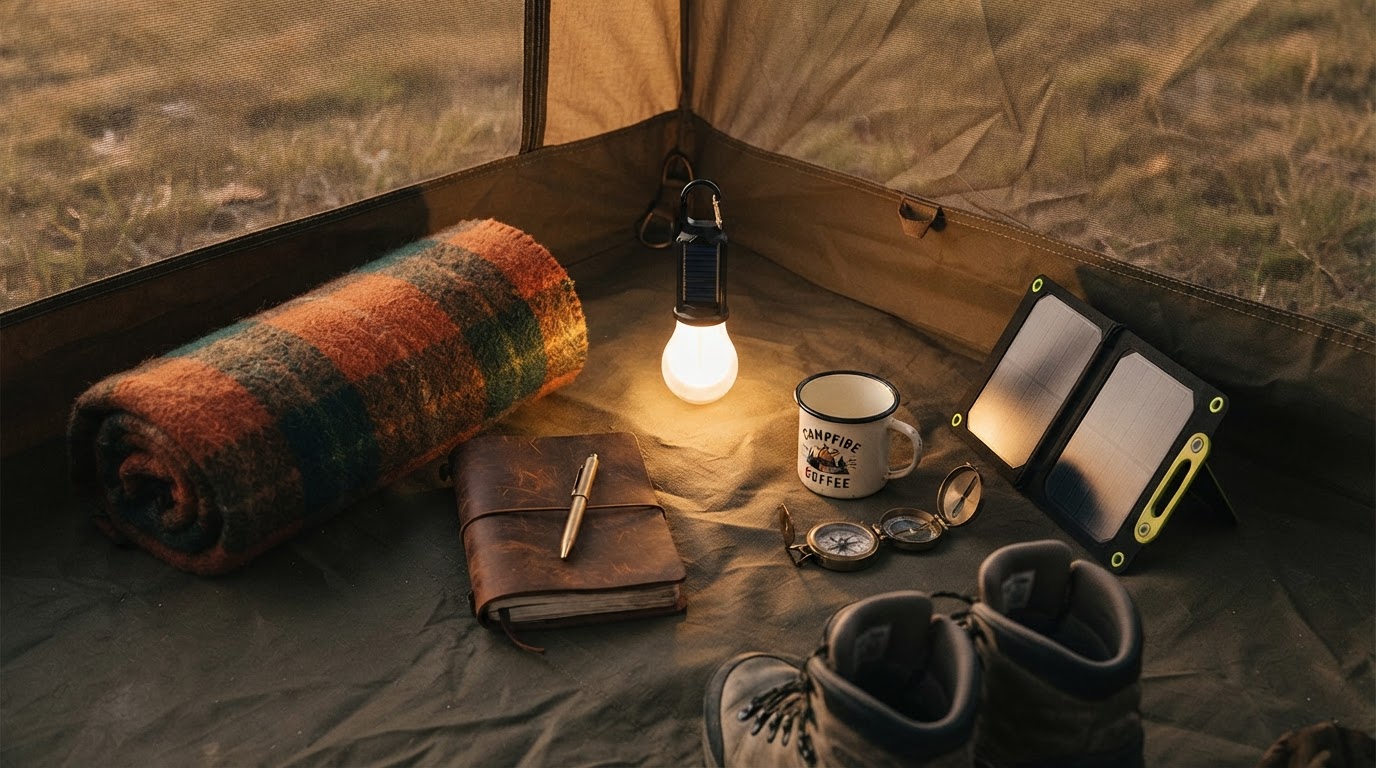
Optimizing Solar Camping Light Placement for Tents
 Sam VasquezBuying Guide Lead
September 18, 2026. This analysis evaluates how to select and position a solar camping light to maximize nighttime visibility without draining battery reserves. It is written for backpackers and car campers who need reliable illumination away from the grid.
The Challenge of Interior Tent Illumination
Selecting the right light for a tent is more complex than just picking the brightest bulb. Most campers struggle with the harsh glare of traditional flashlights or the weight of heavy battery-powered lanterns that pull on the tent’s gear loft. Based on user discussions regarding a portable solar lantern for camping, the primary issue is often the distribution of light rather than raw lumen output. A single point of light creates deep shadows, making it difficult to organize gear or read. This is particularly true when you are trying to coordinate solar powered campsite perimeter lights to ensure the walk back to the tent is safe, only to find the interior pitch-black.
Standard alkaline batteries also present a waste problem and a reliability risk in cold weather. Many campers are shifting toward solar-integrated solutions to reduce pack weight and environmental impact. However, the efficiency of these units depends heavily on their ability to charge through tent mesh or during short daylight windows. If you are setting up a larger structure, you might also be considering solar hanging lights for gazebo camping, which face similar challenges regarding overhead mounting and weight distribution. The goal is to find a balance between a light that is powerful enough to illuminate the floor space but light enough to hang from a nylon loop without causing the fabric to sag or tear. While some people prefer the aesthetic of solar powered fairy lights for camping, these often lack the functional intensity needed for tasks like cooking or map reading inside the tent.
Performance of Solar Camping Light Variations
When I look at the current market, the two most viable formats are the inflatable solar light and the rigid rechargeable solar camping lamp. The inflatable models are my preference for backpacking because they pack down to less than an inch thick and weigh almost nothing. They use a frosted plastic skin to diffuse the LEDs, which prevents the harsh eye-strain common with clear lenses. Between these two, I’d go with the inflatable version for any trip involving a hike. The rigid lamps, however, often feature larger internal batteries and can sometimes double as a power bank for your phone.
If you're on a budget, a basic inflatable unit provides the best value-to-weight ratio. These units typically offer multiple brightness settings and a flashing SOS mode, which is a critical safety feature. The charging times for a Solar Camping Light usually range from 7 to 10 hours of direct sunlight. It is a common mistake to leave the light inside the tent to charge; the UV protection on many modern tent flies can significantly slow down the solar intake. Instead, I clip mine to the outside of my pack during the day. For those who want a more decorative or ambient setup, integrating solar string lights for camping tent along the interior poles can complement a central lantern by filling in the shadow gaps. While a central lantern provides the primary task light, the string lights create a consistent glow that makes the space feel larger and more organized.
Selecting the Right Solar Configuration
Choosing your setup requires looking at your specific camping style. Skip this if you only camp at sites with full electrical hookups, as a standard plug-in lamp will always be brighter. But for everyone else, the decision comes down to how you manage your power. Here’s what I’d actually buy: a high-output inflatable lantern for the center of the tent and a set of small solar markers for the tent stakes. This combination ensures you can see what you are doing inside while preventing trips outside.
When evaluating a solar camping light, use this checklist to ensure it meets your needs:
- Check the weight: A tent light should be under 10 ounces to avoid damaging tent loops.
- Verify the charging method: Ensure it has a USB backup port for cloudy days.
- Look for frosted diffusion: This prevents glare when the light is hanging directly overhead.
- Assess the attachment point: A carabiner or snap-strap is more secure than a simple hook.
- Confirm the runtime: You need at least 4-6 hours on a medium setting to last an entire evening.