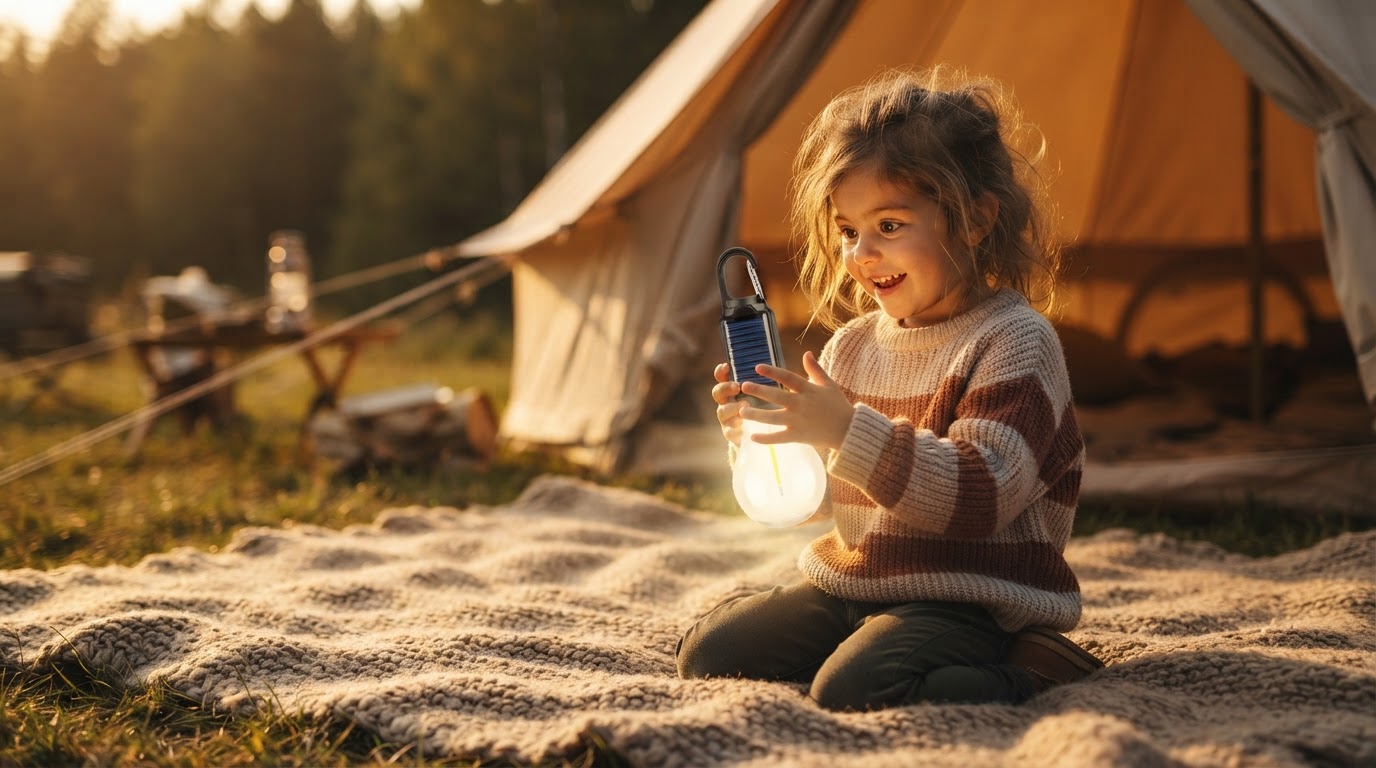
How do I operate a Solar Camping Light rechargeable lamp?
 Jordan HaleStaff Writer
September 15, 2026 — Operating a Solar Camping Light rechargeable lamp requires positioning the integrated photovoltaic panel in direct midday sunlight for at least six hours to ensure the internal lithium-ion battery reaches a full state of charge.
The first thing I noticed was the weight—or rather, the lack of it—as I clipped the Solar Camping Light to the outside of my pack. While modern lanterns are designed to be intuitive, the efficiency of a solar-powered system depends entirely on how you manage the interface between the sun and the cells. Hikers and base-campers alike rely on these devices to bridge the gap between daytime energy harvesting and nighttime visibility.
How do you maximize solar charging efficiency?
Maximizing solar charging efficiency requires angling the Solar Camping Light panel at a 90-degree angle to the sun’s rays during peak ultraviolet hours. It turns out that even a slight tilt away from the direct light path can reduce the charging current significantly. Reddit discussions regarding portable solar lanterns for camping emphasize that placing the unit behind a tent window or under a fly can drop efficiency by up to 50% due to UV filtration. I keep coming back to the habit of clearing the dust off the panel surface with a damp cloth every morning, as a thin layer of trail grime acts as a barrier to photon absorption. For those who need a faster turnaround, utilizing a usb solar camping light combo allows for a wall-outlet boost before heading into the backcountry.
What is the best way to manage battery life at night?
Managing battery life at night involves using the lowest effective lumen setting and utilizing the collapsible design to focus the beam. Somewhere around week two of my last trip, I realized that the high-output mode was often unnecessary for simple tasks like reading or organizing a gear bag. By collapsing the housing, as detailed in our [collapsible solar lantern buying guide](/blog/collapsible-solar-lantern-buying-guide), you can create a concentrated pool of light that requires less energy than a full-room broadcast. To ensure the device remains healthy over time, it is vital to understand how a solar camping light maintains a charge throughout repeated discharge cycles. Standard lithium batteries in these units perform best when they are not frequently drained to 0%, so switching to a low-power red light mode or dimming the white LEDs as the evening progresses helps preserve the voltage for the next day's start.
Quick answers
Q: How long does the Solar Camping Light take to charge via USB? A: When using a standard 5V power source, the internal battery typically reaches 100% capacity in approximately 3 to 4 hours. This is significantly faster than solar-only charging, which requires a full day of clear sky conditions.
Q: Can the lamp be charged while it is turned on? A: While technically possible, it is not recommended as the energy consumption of the LEDs often exceeds the solar input rate. For the most efficient recovery, ensure the power switch is in the 'off' position during daylight hours.
Q: Does the Solar Camping Light work in freezing temperatures? A: The lamp is designed to operate in cold climates, but users should expect a 20% reduction in battery runtime when temperatures drop below 32°F (0°C). Keeping the unit inside a jacket or sleeping bag when not in use helps maintain battery chemistry performance.
Learn more about Solar Camping Light at https://solarcampinglight.com.