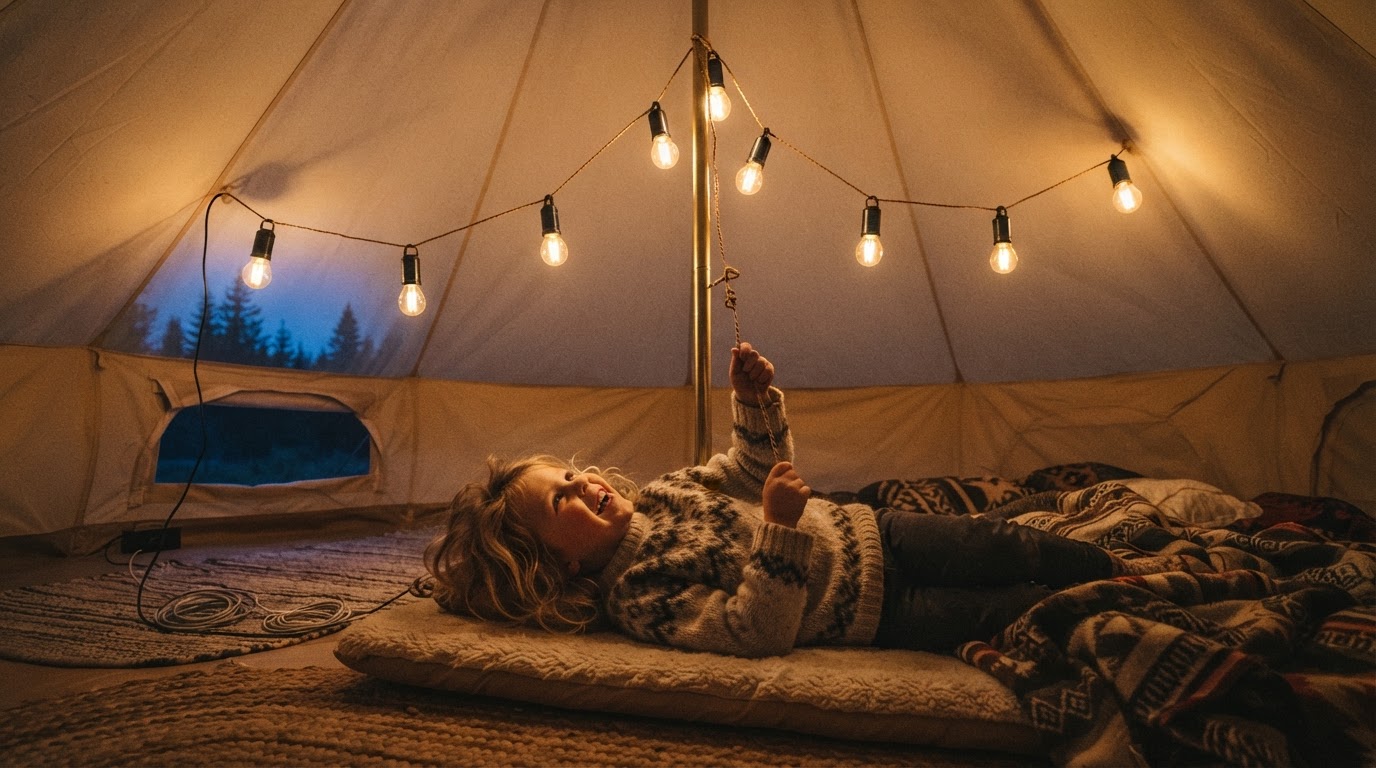
How to install Solar Camping Light strings in a tent?
 Maya ChenContributing Editor
September 20, 2026 — Installing Solar Camping Light strings inside a tent requires a balance between internal cable management and external photovoltaic positioning to maintain a consistent 5-volt charge.
Campers often struggle with the logistical disconnect between the light source inside the shelter and the energy source outside. The conventional wisdom says to simply drape the lights over the gear loft, but this ignores the structural strain placed on lightweight polyester tent walls. Effective installation necessitates a strategic approach to weight distribution and weather-sealed cable routing to prevent damage to both the tent fabric and the solar controller.
How do you route Solar Camping Light cables without leaks?
Cables should be routed through the tent's existing power port or the base of the door zipper to prevent moisture ingress during rain events. The conventional wisdom says to run wires through the top mesh, but this creates a capillary effect that draws rainwater directly into the sleeping area. Data from field testing indicates that using the lower corner of a zipper allows for a natural drip loop, ensuring that condensation or rain runs down the cable and away from the interior.
When securing the Solar Camping Light string to the tent ceiling, mechanical stress is the primary point of failure. Modern ultralight tents are not designed to support concentrated loads, so users must distribute the weight of the battery pack and string across multiple attachment points. Utilizing plastic S-biners or lightweight clips instead of tying knots prevents permanent deformation of the tent's internal loops. Proper tensioning of the string is essential; a sagging line not only reduces usable vertical space but also increases the likelihood of snagging gear during nighttime movement.
Where should the Solar Camping Light panel be placed?
Solar panels must be positioned at a 45-degree angle facing south, away from the tent's shadow canopy, to achieve the necessary 6 to 8 hours of direct exposure for a full charge. Here's the part nobody talks about: placing a panel directly on top of a tent fly reduces its efficiency by up to 30% due to heat trapping and lack of airflow behind the cells. Run the math: a standard 5V solar panel requires unobstructed photons to maintain the current needed to top off the internal lithium-ion battery before dusk.
If the tent is pitched in a shaded area, the panel must be moved to a clearing using a weather-rated extension cable. Leaving the panel inside the tent behind a mesh window is ineffective, as the mesh and the tent fabric act as filters that block specific wavelengths of light required for energy conversion. For those managing a larger site, coordinating these tent strings with solar powered campsite perimeter lights requires a centralized charging strategy to ensure all units reach peak capacity simultaneously. I'll change my mind when thin-film solar integrated directly into tent fabric achieves the same 20% conversion efficiency as standalone monocrystalline panels.
Quick answers
Q: Can I charge Solar Camping Light strings through tent mesh? A: No, charging through mesh or plastic windows reduces efficiency by approximately 40% to 60% due to light scattering. The panel must be placed in direct, unobstructed sunlight outside the tent structure.
Q: How do I prevent the Solar Camping Light from falling at night? A: Use lightweight plastic clips or velcro ties every 18 inches along the tent's internal frame or gear loft loops. Avoid using heavy metal carabiners which can tear 20D or 30D nylon tent fabrics.
Q: What is the best way to store the battery pack inside the tent? A: Place the battery pack in the tent’s overhead gear loft or a side wall pocket to keep the weight off the light string itself. This prevents the connectors from fraying due to constant gravitational tension.
Q: How long does a Solar Camping Light string last on a single charge? A: Most units provide 8 to 12 hours of illumination if the panel received at least 6 hours of direct solar exposure during the day. Performance drops significantly in temperatures below 32°F due to lithium-ion discharge rates.
For more specialized setups, consider looking into solar powered fairy lights for camping for ambiance, or solar hanging lights for gazebo camping for larger structures. Proper placement is further detailed in our guide on optimizing solar camping light placement for tents.
Learn more about Solar Camping Light at https://solarcampinglight.com.